
F&P BlogWhat’s in it for me?
Why We Had to Turn the Leadership Pyramid Upside Down to Ensure a Successful Transformation

“The transformation makes sense. But personally, I don’t really want it.” This statement from a team during an operational transformation really got me thinking. The need for greater productivity was understandable—so why was there still a lack of willingness to support the change?
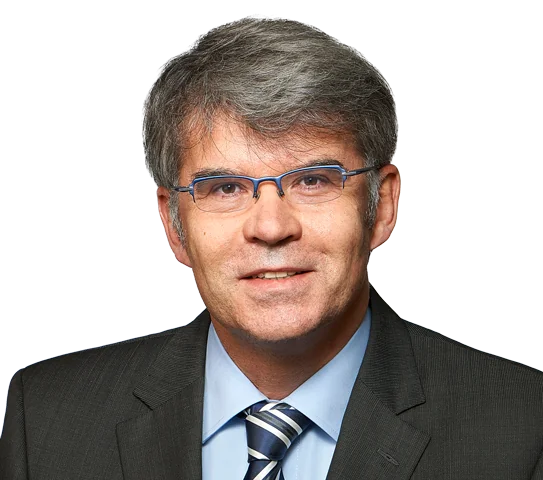
F&P Partner Thomas Knupfer
Improved Workflows, Changes in Work
Author: Thomas Knupfer
In the final assembly department of a mechanical engineering company, the work required for a single machine totaled several hundred hours. Unstable scheduling led to long lead times and virtually no on-time delivery. We improved the scheduling and switched from workstation-based assembly to synchronized production with smaller workloads per station.
But what was a necessary improvement for the company significantly changed the day-to-day work routine: Poor planning had previously led to downtime and gaps in the schedule. The new workflow required continuous, productive work. The additional introduction of teamwork and responsibility—for example, for organizing work—did not initially meet with the hoped-for acceptance. Trainees also described the work as boring and the scope for initiative as limited.
Our conclusion: We had primarily improved the process—but not sufficiently the conditions under which people can positively change their behavior.
The Turning Point: Shop Floor Management
Process excellence alone is not enough. It must be complemented by management and behavioral excellence: Leadership provides direction and support; employees can openly address problems and help shape improvements. The turning point in our project came with the introduction of shop floor management—not as yet another round of key performance indicators, but as a daily leadership and problem-solving process.
We mentally turned the leadership pyramid upside down. Those who had previously been “at the bottom” of the hierarchy moved “to the top” when it came to identifying problems and developing solutions: They had firsthand knowledge of the difficulties on the assembly line. Their observations and suggestions were incorporated into the decisions. Managers had to listen, ask questions, remove obstacles, and ensure that agreed-upon measures were followed through on.
How Employees Benefit
The benefit wasn’t about reclaiming time that had previously been spent idling. It was about having a real say: problems are taken seriously, solutions are developed collaboratively, and obstacles are actually addressed. This is different from simply assigning tasks within a group. Even a tightly scheduled assembly line can offer opportunities for participation—if leadership consciously creates that space.
I take three lessons from this: Consider processes and behavior together; enable participation in real improvements; and measure leadership by whether it solves problems and delivers the promised support. Methods create structure. Only a change in leadership behavior enables people to support and further develop that structure in their day-to-day work.
So the answer to “What’s in it for me?” is: My experience matters. I can improve my work. My contributions make a difference.
Sometimes you have to turn the management pyramid upside down to ensure that operational excellence is built on a solid foundation.